
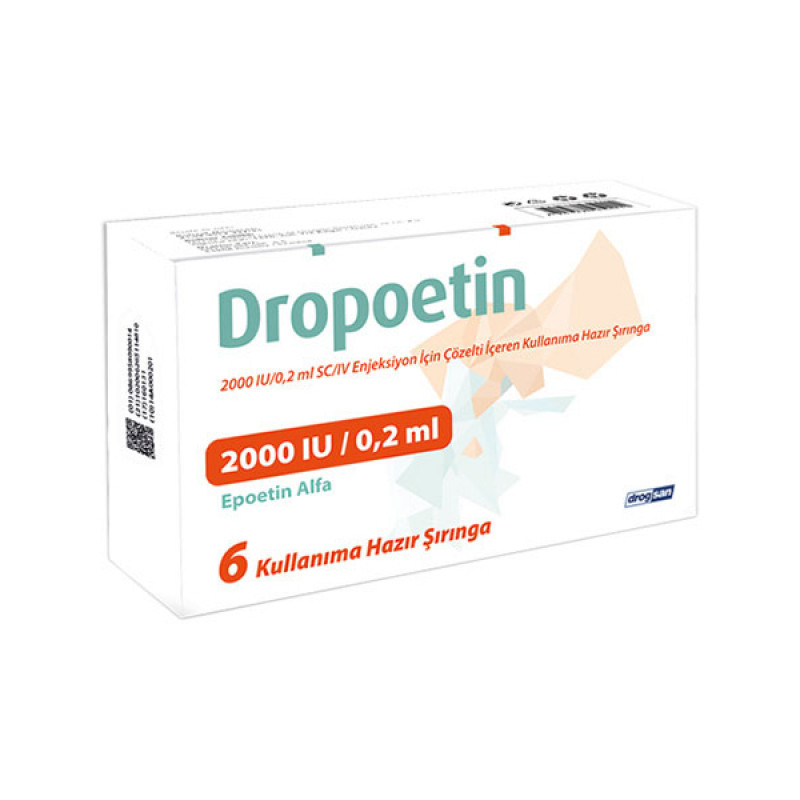
PRODUCT CLASSIFICATION
Glycoprotein Cytokine
ACNE RISK
No
WATER RETENTION
No
HBR
No
HEPATOTOXICITY
No
AROMATIZATION
No
MANUFACTURER
Drogsan
WAREHOUSE LOCATION
International Warehouse 2
ACTIVE INGREDIENT
Erythropoietin
Introducing Dropoetin, a trusted treatment for anemia associated with chronic renal failure in both adults and children undergoing hemodialysis or peritoneal dialysis. This powerful medication is also effective for managing severe renal-origin anemia in adults with renal insufficiency who have not yet started dialysis.
Dropoetin is specifically formulated to alleviate anemia and minimize the need for blood transfusions in adult cancer patients (excluding those with myeloid malignancies) undergoing chemotherapy. For adults living with HIV and receiving zidovudine, Dropoetin provides essential support when endogenous levels of Dropoetin fall to ?500 mU/ml.
This medication can also facilitate autologous blood collection in predeposit programs, significantly reducing the likelihood of allogeneic blood transfusions in patients with moderate anemia (hematocrit levels of 33-39%, hemoglobin ranging from 10-13 g/dL) scheduled for major elective surgeries that may require substantial blood supply beyond what can be sourced autologously. Administer Dropoetin only when blood-saving alternatives are insufficient for procedures expecting a significant blood loss (4 or more units for females or 5 or more units for males).
In the perisurgical context, Dropoetin enhances erythropoiesis to decrease the necessity for allogeneic blood transfusions and manage postoperative anemia in adults with moderate anemia (e.g., Hb 10-13 g/dL) who are not part of an autologous blood donation program and may experience moderate blood loss (900 to 1800 ml) during major elective orthopedic surgeries.
Dropoetin is also indicated for treating anemia in patients with Low or Intermediate 1-risk Myelodysplastic Syndrome (MDS) who have hemoglobin levels below 10 g/dL.
How to Use Dropoetin
Administer Dropoetin precisely as directed by your physician. Always consult the medication label for specific dosing guidelines.
Dropoetin comes with a Medication Guide for patients; it?s crucial to read this guide thoroughly and revisit it with each prescription refill. Typically, Dropoetin is given via injection by a healthcare professional in a clinical setting. If using Dropoetin at home, a healthcare provider will demonstrate the correct administration method. Ensure you fully understand the procedure and follow their instructions carefully. Don?t hesitate to contact your provider if you have any questions.
When preparing your dose, adhere to the method demonstrated to prevent contamination of the vial, syringe, or medication. Avoid touching the rubber stopper or syringe needle with your fingers.
Always verify that you have drawn the correct dose before administration. Do not shake Dropoetin, and do not use the product if it has been shaken or frozen. Dilution or combination with other solutions should only be done under your doctor's instruction.
For single-dose vials, discard any remaining medication post-administration. If you have questions about single-dose vials, consult your healthcare provider. Avoid using Dropoetin if it appears cloudy, discolored, has particles, or if the vial is cracked or damaged.
Keep Dropoetin and all syringes and needles out of children's and pets? reach. Do not reuse needles or syringes and inquire about proper disposal methods with your healthcare provider. Follow local disposal regulations.
Continue using Dropoetin as prescribed, even if you feel well, and do not skip doses. If you miss a dose, reach out to your doctor immediately.
For any additional questions regarding Dropoetin, feel free to contact your healthcare provider.
Potential Side Effects of Dropoetin
Serious adverse reactions may include:
- Increased mortality, myocardial infarction, stroke, and thromboembolism
- Increased mortality and/or heightened risk of tumor progression or recurrence in cancer patients
- Hypertension
- Seizures
- Pure Red Cell Aplasia (PRCA)
- Severe allergic reactions