
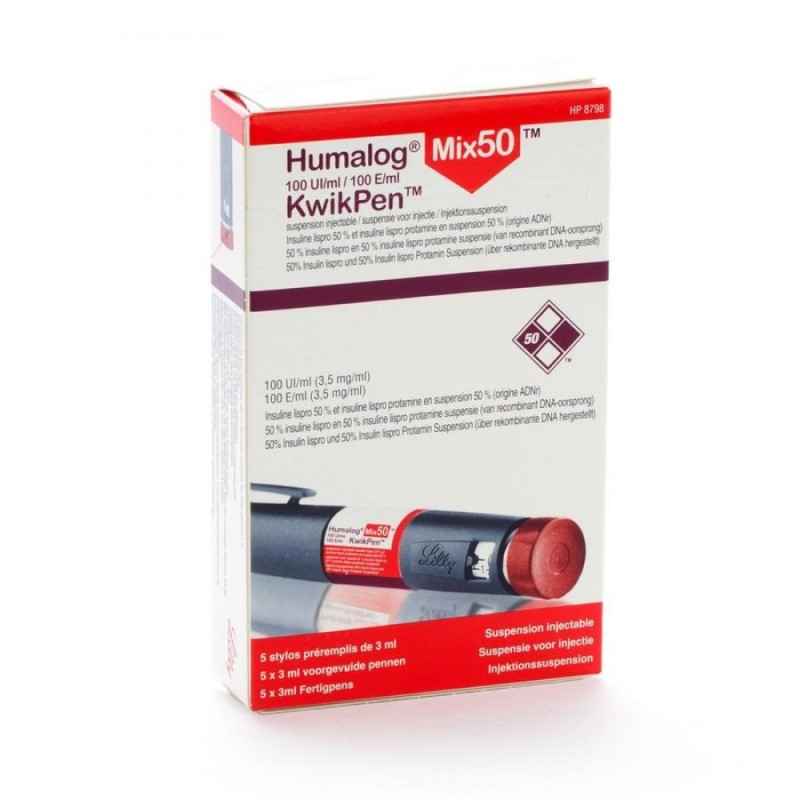
Humalog Kwikpen Mix 50
- Brand: Lilly
- Product Code: Humalog Kwikpen Mix 50
- Availability: In Stock
-
$129.00
CLASSIFICATION
Hormone and Synthetic Substitute / Antidiabetic Agent
ACNE
No
WATER RETENTION
No
HBR
No
HEPATOTOXICITY
No
AROMATIZATION
No
MANUFACTURER
Lilly
WAREHOUSE
International Warehouse 2
SUBSTANCE
Insulin Lispro, Insulin Lispro Protamine Suspension
Insulin is a critically important anabolic hormone that all humans produce, playing an essential role in your overall health. While your body naturally synthesizes insulin, individuals with diabetes often need supplemental insulin to maintain glucose control. Additionally, some athletes may use it to enhance lean muscle growth, but it?s crucial to approach its use with caution, as misuse can result in severe health risks.
Although insulin production is a natural process, external insulin was first introduced in the 1920s, initially sourced from the pancreases of dogs and later from cattle and pigs. Despite early concerns over purity, its life-saving properties far outweighed the associated risks. By the 1970s, advances in technology significantly improved insulin purity, paving the way for synthetic insulin's debut in 1975. This included Humulin-R in 1982, which was a precise replica of human insulin and earned FDA approval.
Functions and Characteristics of Insulin:
Insulin, categorized as a peptide hormone, is secreted by the pancreas and is essential for regulating glucose, amino acids, and fatty acids. It works to prevent the breakdown of glycogen, fat, and protein, ensuring optimal metabolic function.
For individuals with diabetes, there are two primary types requiring insulin therapy. Type I diabetes is characterized by the body's inability to produce enough insulin, while Type II diabetes is often associated with insulin resistance, frequently exacerbated by obesity.
Insulin promotes liver function by converting glycogen to glucose and inhibits the production of non-carbohydrates into glucose. Its effects enhance glucose absorption in cells, aiding in muscle growth. Increased insulin levels also correlate with enhanced protein synthesis and improved bone density, alongside the production of Insulin-Like Growth Factor-1 (IGF-1), another anabolic hormone similar to insulin.
Moreover, insulin may slightly elevate Luteinizing Hormone (LH) and Follicle Stimulating Hormone (FSH), which can support testosterone production, albeit modestly.
Effects of Insulin:
The primary role of insulin is to regulate blood sugar levels, while its potent anabolic and anti-catabolic properties can benefit various athletes. However, off-label use without proper oversight can lead to excessive fat gain and potentially life-threatening situations.
Despite the risks, many athletes leverage insulin for its muscle-building effects; however, careful management of body fat levels is vital. High insulin levels can inhibit fat burning, necessitating a meticulously planned diet. By ensuring that calories and fats are channeled toward muscle rather than fat storage, users can optimize their results. Administering insulin right after intense workouts, along with food, can yield the best outcomes.
When utilized correctly, insulin can significantly enhance muscle growth in a short period. Although some may face challenges with fat gain, it can be managed under the right circumstances. Athletes often combine insulin use with anabolic steroids and Human Growth Hormone (HGH) for superior results and effective fat control.
Side Effects of Insulin:
Insulin can lead to several side effects, particularly related to hypoglycemia. For diabetic patients, this is typically manageable with proper dosing; however, in performance contexts, it can pose serious risks. While hypoglycemia may appear benign, it can escalate into severe complications, including death.
Hypoglycemia arises when blood sugar levels drop excessively low, and it is the primary side effect associated with insulin use. Common symptoms include:
- Dizziness
- Hunger
- Drowsiness
- Blurred Vision
- Depression
- Sweating
- Heart Palpitations
- Tingling in Extremities
- Loss of Focus
- Headaches
- Lightheadedness
- Anxiety
- Irritability
- Slurred Speech
- Personality Changes
- Unsteady Movements
If hypoglycemic symptoms manifest, immediate consumption of fast-acting carbohydrates?like candy or sugary drinks?is recommended. Users should avoid sleeping post-insulin administration unless they are certain of stable blood glucose levels, as this could lead to severe hypoglycemia during sleep. In severe cases, seek medical assistance without delay. Given these potential side effects, self-administration of insulin should always be done with caution.
Many question the severity of hypoglycemia. Although it can often be treated easily, it has the potential to escalate into a diabetic coma, resulting in unresponsiveness or even death. Numerous fatalities have been reported in connection with performance-related insulin use.
Allergic reactions, though rare, may occur, presenting as swelling, itching, or irritation at the injection site. If these effects arise, prompt medical attention is advised. Additionally, repeated injections in the same area may cause localized fat accumulation, highlighting the necessity of rotating injection sites.
Insulin Administration:
When treating diabetes, insulin dosages can vary significantly from patient to patient, reflecting individual needs.
For performance enhancement, insulin is available in various forms, typically classified as short-acting or long-acting. Fast-acting options like Humulin-R, Humalog, and Novolog are popular among athletes.
Humalog acts swiftly, taking effect within 15 minutes post-injection, peaking between 30 to 90 minutes, and lasting 3-5 hours. Novolog and Humulin-R follow similar timelines, with Humulin-R being the slowest. While Novolog may be challenging to obtain, Humalog generally requires a prescription, while Humulin-R is available over the counter, making it a favored choice among athletes.
The recommended insulin dosage for performance enhancement is about 1 IU for every 10 pounds of body weight. First-time users should start with a lower dose of 1 IU after workouts, gradually increasing by 1-2 IU daily until they identify their optimal level. If hypoglycemic symptoms arise that are difficult to manage even with sugar intake, the dosage may be too high. Many individuals find that they do not require the full 1 IU per 10 pounds due to varying tolerance levels.
Once the optimal dosage is determined, insulin should be administered immediately following weight training for maximum efficacy. After injection, it?s generally advised to consume at least 100 grams of carbohydrates, with solid and liquid carbs ingested about 15 minutes later, alongside 40-50 grams of protein.
While 100 grams of carbs serves as a baseline, users may need more as insulin doses increase. Remember, insulin?s effectiveness does not necessitate excessive amounts, so starting with lower doses and gradually adjusting is wise.
Post-injection, it's critical to have fast-acting carbohydrates on hand in case of hypoglycemic symptoms. A responsible insulin user should never inject without a reliable carbohydrate source nearby. If symptoms arise, carbohydrates should be consumed until they subside. Regardless of hypoglycemic symptoms, another meal should be prepared soon after the post-injection meal.
Insulin Evaluation:
Insulin is pivotal for health and optimal bodily function. While it can significantly enhance muscle growth as a performance aid, its use carries inherent risks. Many athletes may find they can achieve their goals without insulin, benefiting their physique in the long run by steering clear of it entirely. Nonetheless, it remains a staple within competitive bodybuilding circles, where participants often possess exceptional genetics and utilize a range of additional hormones.
Moreover, some athletes, not primarily focused on physique enhancement, may turn to insulin since it is undetectable in drug tests, often using it in conjunction with HGH and possibly low doses of testosterone and thyroid medications to navigate testing challenges. However, their overall insulin dosage tends to remain low.