
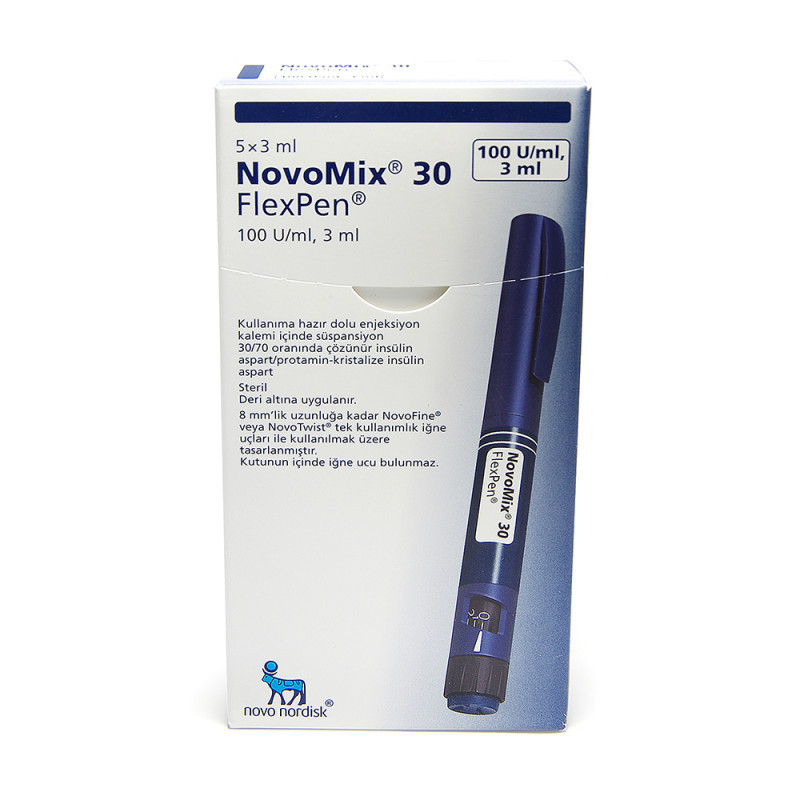
Novomix 30 Flexpen
- Brand: Novo Nordisk
- Product Code: Novomix 30 Flexpen
- Availability: In Stock
-
$131.00
CLASSIFICATION
Hormone and Synthetic Substitute / Antidiabetic Agent
ACNE
No
WATER RETENTION
No
HBR
No
HEPATOTOXICITY
No
AROMATIZATION
No
MANUFACTURER
Novo Nordisk
WAREHOUSE
International Warehouse 2
SUBSTANCE
Insulin
Insulin, a potent anabolic hormone naturally produced in the human body, is crucial for maintaining optimal health. While the body synthesizes insulin, individuals with diabetes often need supplemental insulin therapy to manage their condition. Additionally, some athletes utilize insulin to promote lean muscle growth; however, misuse can pose serious health risks and should be approached with caution.
Insulin has a fascinating history, becoming available for external use in the 1920s, initially derived from the pancreases of dogs, followed by cattle and pigs. Despite early concerns regarding purity, the life-saving capabilities of exogenous insulin were quickly acknowledged. For those suffering from untreated diabetes, the risk of death is significant, making the use of animal-sourced insulin a pragmatic solution. By the 1970s, advancements in purification led to the introduction of synthetic insulin by Ciba in 1975, culminating in the FDA-approved Humulin-R in 1982, the first identical replica of human insulin.
Roles and Characteristics of Insulin:As a peptide hormone produced in the pancreas, insulin is vital for regulating glucose, amino acids, and fatty acids, preventing the metabolic breakdown of carbohydrates, fats, and proteins.
Diabetes patients typically fall into two categories: Type I diabetes, where the body fails to produce sufficient insulin, and Type II diabetes, characterized by insulin resistance often linked to obesity.
Insulin supports liver function by promoting glycogen synthesis from glucose while inhibiting the conversion of non-carbohydrates into glucose. It also facilitates glucose uptake in cells, fostering muscle development. Elevated insulin levels can enhance protein synthesis and bone density, alongside increasing production of Insulin-Like Growth Factor-1 (IGF-1), a hormone similar to insulin that promotes anabolism.
Moreover, insulin can influence the secretion of Luteinizing Hormone (LH) and Follicle Stimulating Hormone (FSH), which may slightly enhance testosterone production, though this effect is not particularly strong.
Impact of Insulin:Insulin's primary function, whether for Type I or Type II diabetes, revolves around blood sugar regulation. Its powerful anabolic and anti-catabolic properties make it appealing to various athletes. However, non-medical use poses risks, including significant weight gain and potentially life-threatening complications if not managed properly.
Despite these dangers, some athletes pursue insulin's anabolic benefits, provided they can manage body fat levels. Elevated insulin impairs the body's ability to burn stored fat, necessitating a strict, well-structured diet to ensure nutrient storage occurs in muscle rather than fat tissue. The ideal time for insulin administration is immediately post-exercise, ideally accompanied by food.
When utilized correctly, insulin can yield rapid gains in lean muscle mass, although many struggle to control body fat increases. It is often recommended to combine insulin with anabolic steroids and Human Growth Hormone (HGH) for enhanced muscle growth and fat management.
Potential Side Effects of Insulin:The most significant concern regarding insulin use is hypoglycemia, particularly in performance scenarios. While proper dosing typically mitigates this risk for diabetic patients, it can present challenges for non-diabetics using insulin.
Hypoglycemia occurs when blood sugar levels dip too low and is the most common side effect of insulin. Symptoms may include:
- Dizziness
- Hunger
- Drowsiness
- Blurred vision
- Depression
- Sweating
- Heart palpitations
- Tingling sensations
- Loss of concentration
- Headaches
- Lightheadedness
- Anxiety
- Irritability
- Slurred speech
- Mood changes
- Unsteady movements
In the event of hypoglycemic symptoms, fast-acting carbohydrates like candy or sugary drinks should be consumed immediately. It is crucial not to sleep after administering insulin; if drowsiness occurs, it signals the need for additional carbohydrates. Ignoring this warning could lead to a hypoglycemic state during sleep, which can be fatal if unaddressed. Always have an emergency contact present when administering insulin for safety.
Severe hypoglycemia may result in serious consequences, such as diabetic coma or death. While often reversible, the risks highlight the importance of caution.
In addition to hypoglycemia, insulin may cause rare allergic reactions characterized by swelling, itching, or irritation at the injection site. Other uncommon reactions can include rash, difficulty breathing, rapid heart rate, wheezing, or low blood pressure, all requiring immediate medical attention.
Repeated injections in the same area can lead to localized fat accumulation, emphasizing the need to rotate injection sites.
Insulin Administration:Dosing for diabetes varies widely based on individual requirements, with no universal standard.
For performance enhancement, different insulin formulations necessitate tailored dosing strategies. A common guideline suggests administering approximately 1 IU of insulin for every 10 pounds of body weight. First-time users should start with a lower initial dose of 1 IU immediately after weight training, gradually increasing by 1-2 IU per day until they find their optimal dosage. Symptoms of hypoglycemia may indicate an excessive dose.
Once an effective insulin dose is determined, it is essential to inject it immediately post-training. Following the injection, individuals should consume at least 100 grams of carbohydrates and continue taking solid and liquid carbohydrates about 15 minutes later. It is also advisable to consume around 40-50 grams of protein alongside carbohydrates.
While 100 grams of carbohydrates is the minimum requirement, the actual need may vary based on insulin dosage and individual genetics. However, it's important to understand that a small amount of insulin can achieve the desired effects, so starting low is recommended.
After administering insulin and consuming carbohydrates and protein, individuals should keep fast-acting carbohydrates readily available to address potential hypoglycemia. Responsible users should never inject insulin without ensuring adequate carbohydrates are within reach and should consume them if symptoms begin to appear. Following the post-injection meal, it is crucial to plan another meal shortly thereafter.
Insulin Summary:Insulin is vital for overall health and physiological function. While it can significantly enhance muscle building more effectively than many other hormones, its use carries inherent risks. Most individuals do not need insulin for performance enhancement and may find it wiser to avoid it for long-term aesthetic goals. Still, it remains popular among competitive bodybuilders?both amateur and professional?who often have unique genetic advantages and employ various additional hormones in their regimen. Regular gym-goers using performance enhancers may encounter excessive body fat gain if they incorporate exogenous insulin without meticulous management.
Moreover, insulin's appeal extends to non-physique-focused athletes due to its undetectability in drug tests. Some of these athletes may pair insulin use with HGH and low doses of testosterone and thyroid medications to navigate testing restrictions, although they often use lower insulin doses.