
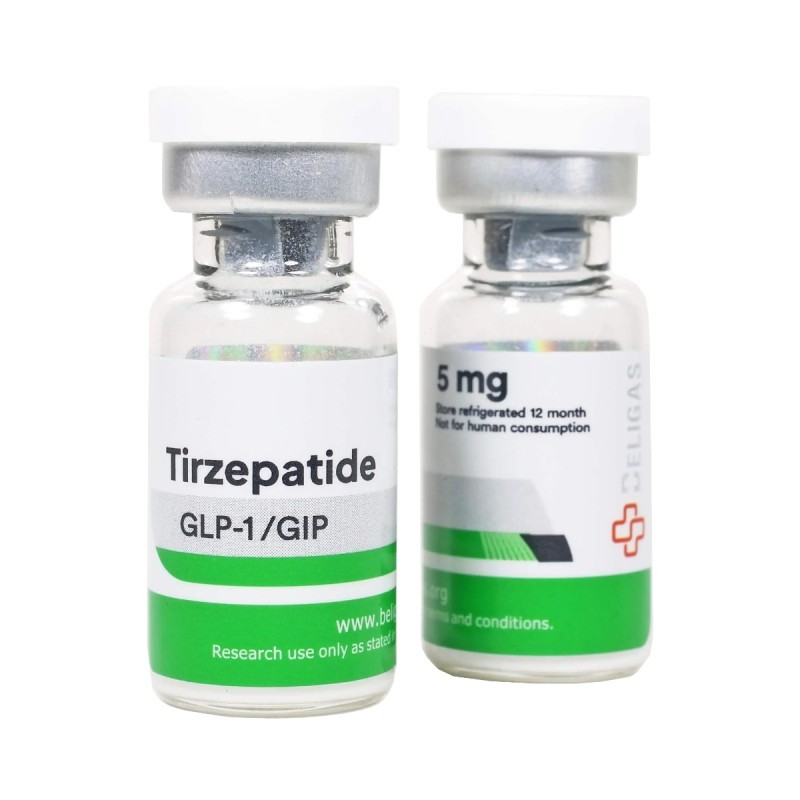
ACTIVE HALF-LIFE
5 days
CLASSIFICATION
Dual GIP and GLP-1 Receptor Agonist
MANUFACTURER
Beligas - US
WAREHOUSE
USA Warehouse 2
SUBSTANCE
GIP/GLP-1 RA
Introducing Tirzepatide, a groundbreaking synthetic peptide designed to effectively manage glucose levels. This innovative treatment works by stimulating both the initial and secondary phases of insulin secretion while simultaneously lowering glucagon levels, all in a glucose-dependent manner.
For individuals battling type 2 diabetes, Tirzepatide offers a host of benefits: it slows gastric emptying, reduces fasting and post-meal glucose levels, curbs appetite, and aids in weight loss. Moreover, it has been shown to enhance insulin sensitivity, making it a valuable addition to diabetes management.
The unique structure of this peptide features a C20 fatty diacid linked via a hydrophilic connection at the lysine residue at position 20. This design facilitates strong binding to albumin in the bloodstream, effectively extending its duration of action.
GLP-1 receptors (GLP-1R) are distributed throughout the body, including in pancreatic beta-cells and the gastrointestinal tract. These receptors play a crucial role in type 2 diabetes management by regulating glucose levels. GLP-1R signaling promotes insulin secretion in response to glucose, slows gastric emptying, decreases blood glucagon levels, and activates brain pathways that suppress appetite. In conjunction with glucose-dependent insulinotropic polypeptide (GIP), GLP-1 works to maintain glucose balance by stimulating insulin release when food intake occurs. Notably, GIP is recognized as the primary incretin hormone that triggers insulin secretion post-meal.
While the exact mechanism of Tirzepatide is still being explored, its dual action on both GIP and GLP-1R is believed to significantly contribute to blood sugar control and weight management. Research suggests that combining GIP with a GLP-1R agonist produces a more robust insulin response and reduces glucagon secretion compared to administering each hormone separately. Tirzepatide exhibits high affinity for both GIP and GLP-1R, demonstrating a binding affinity to GIP receptors comparable to that of natural GIP, although its affinity for GLP-1R is five times lower than that of native GLP-1. Through its interaction with either the GIP receptor (GIPR) or GLP-1R, Tirzepatide effectively activates the GLP-1R signaling pathway to trigger insulin release in response to glucose. However, further investigation is needed to fully understand the implications of GIPR activation in the drug's overall mechanism of action, as findings on GIPR stimulation's effects on blood glucose and weight management vary across clinical and preclinical studies.