
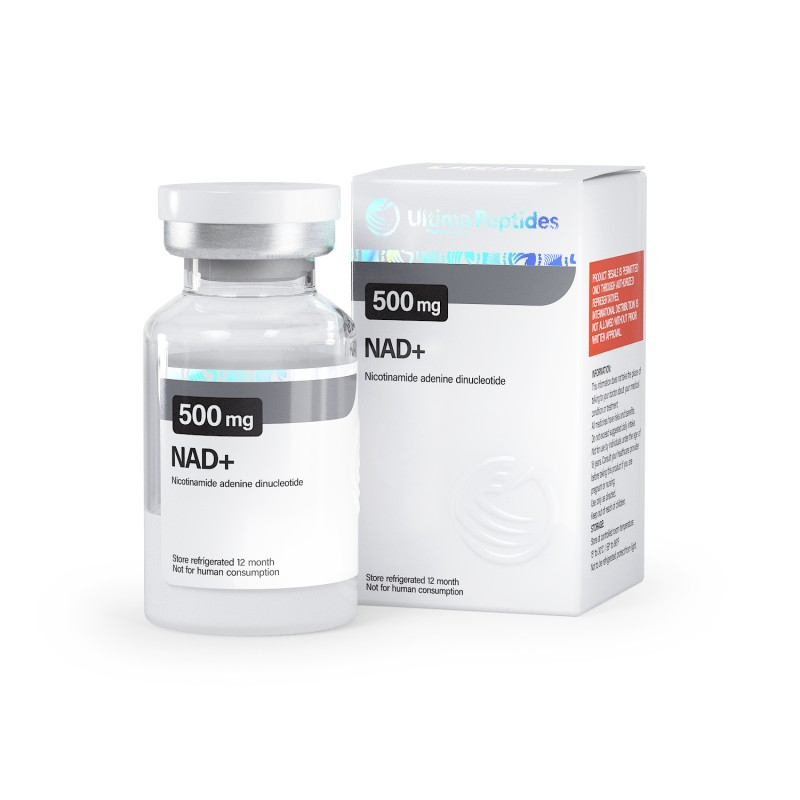
Ultima-NAD+
- Brand: Ultima Pharmaceuticals - US
- Product Code: Ultima-NAD+
- Availability: In Stock
-
$120.00
MANUFACTURER
Ultima Pharmaceuticals - USA
WAREHOUSE
USA Warehouse 5
SUBSTANCE
Nicotinamide Adenine Dinucleotide
Nicotinamide adenine dinucleotide (NAD?) is an essential cofactor found in every living cell, playing a pivotal role in the enzymatic processes that sustain critical biological functions. Discovered in 1906, extensive research now underscores NAD?'s significance in supporting cellular health, tissue vitality, and overall well-being.
As we age, NAD? levels naturally decline, a reduction linked to various age-related conditions, including cognitive decline, cancer, metabolic disorders, sarcopenia (muscle loss), and increased frailty. Restoring NAD? levels may help mitigate or even reverse many of these health challenges.
But what exactly is NAD?? How does our body produce and use it? Understanding these aspects is vital for unlocking NAD??s role in promoting healthy aging and exploring potential treatments for NAD? deficiencies.
Where is NAD? Found in the Cell?
NAD? is strategically located in various cellular compartments, including the cytoplasm, mitochondria (the powerhouses of the cell), and the nucleus (where our genetic material resides). Each of these subcellular pools of NAD? is managed independently, with dedicated enzymes responsible for its synthesis and breakdown.
How Do Cells Generate NAD??
NAD? is indispensable for numerous biological functions and is continually produced, metabolized, and recycled to maintain optimal intracellular levels. Certain cells, particularly those in the liver, can synthesize NAD? from various dietary sources, such as L-tryptophan and vitamin precursors like nicotinic acid (NA).
However, most cells outside the liver lack the full set of enzymes required for converting tryptophan into NAD?. Instead, they can salvage NAD? from nicotinamide (NAM), a by-product of NAD?-dependent enzymatic reactions. In the liver, tryptophan is primarily converted to NAM, which then enters the bloodstream, is absorbed by other cells, and is ultimately transformed into NAD?. In this process, NAM is converted to nicotinamide mononucleotide (NMN) by the enzyme NAMPT, which can further convert NMN into NAD?. NMN can also be synthesized from nicotinamide riboside (NR).
Key Enzymes Utilizing NAD?
NAD? is actively utilized by three primary enzyme groups: sirtuins, PARPs (poly(ADP-ribose) polymerases), and NAD+-glycohydrolases (commonly known as NADases), including CD38, CD157, and SARM1.
Sirtuins
Research has illuminated the connection between NAD? and aging, particularly highlighting sirtuins that are essential for regulating metabolism, stress response, and the aging process.
PARPs
The PARP protein family comprises 17 members that break down NAD? into NAM and ADP-ribose. Targeting PARPs, especially PARP1, could be a promising therapeutic strategy for addressing age-related issues, although further research is needed to clarify their role in the decline of NAD? levels over time.
NADases
CD38 and CD157 are multifunctional enzymes located on cell membranes, influencing critical cellular processes such as immune response, survival, and metabolism. Both CD38 and CD157, which utilize NMN and NR as alternative substrates, respectively, are upregulated in aging tissues and may contribute to age-related diseases like arthritis and cancer. Recently, SARM1 has emerged as another NADase, predominantly found in neurons, playing a role in neuronal development and inflammation, and presenting a target for therapies aimed at neurodegenerative diseases and brain injuries.
The Multifaceted Role of NAD? in Cells
Beyond its use in key enzyme groups, NAD? acts as a vital cofactor for over 300 enzymes involved in various biochemical reactions. It mediates essential cellular functions and metabolic adjustments, including DNA maintenance, repair for genomic stability, and autophagy?the cell's recycling process. These processes are crucial for overall health, but as NAD? levels diminish with age, disruptions can exacerbate age-related conditions.
The Link Between NAD? and Aging
As we grow older, NAD? levels decrease, and many enzymes involved in NAD? metabolism undergo alterations. This decline impacts multiple cellular processes associated with aging, such as metabolic dysfunction, impaired DNA repair, genomic instability, inflammation, cellular aging, and neurodegeneration. These changes have been linked to the development and progression of various age-related diseases, including atherosclerosis, arthritis, hypertension, cognitive decline, diabetes, and cancer.
Boosting NAD? Levels
NAD? levels can be partially restored through dietary sources like NMN, NR, and NAM. Additionally, cellular NAD? levels may be enhanced by activating biosynthesis enzymes or inhibiting NAD?-degrading enzymes. For instance, inhibiting CD38 and CD157 may improve the effectiveness of common NAD? precursors in replenishing NAD? levels in older adults.
Moreover, lifestyle modifications?such as increased physical activity, reduced caloric intake, a balanced diet, and establishing a consistent daily routine?can support NAD? levels. Prioritizing healthy sleep patterns and meal timings is essential, as research highlights the role of sleep and circadian rhythms in regulating our biological clocks.
In summary, these approaches not only help elevate tissue NAD? levels but also promote improved organ function, cognitive health, metabolic well-being, reduced inflammation, and enhanced physical activity, potentially extending both healthspan and lifespan.