
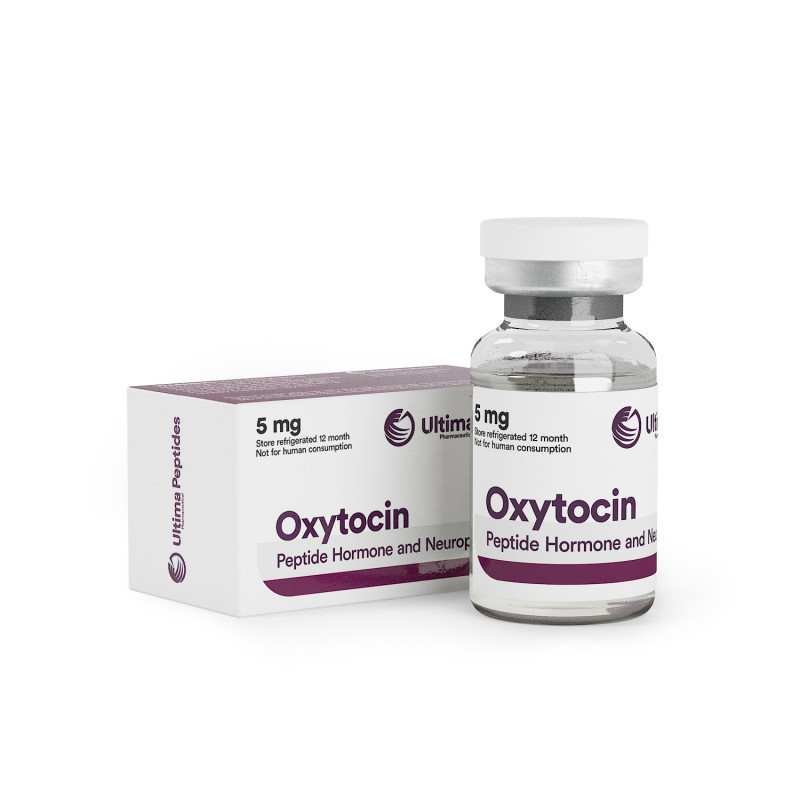
Ultima-Oxytocin 5mg
- Brand: Ultima Pharmaceuticals - US
- Product Code: Ultima-Oxytocin 5mg
- Availability: In Stock
-
$61.00
MANUFACTURER
Ultima Pharmaceuticals - USA
WAREHOUSE
USA Warehouse 5
SUBSTANCE
Oxytocin
Products are shipped discreetly without branding for security purposes.
Oxytocin, often dubbed the "cuddle hormone" or "love hormone," is a powerful hormone synthesized by the posterior lobe of the pituitary gland, located at the base of the brain. This remarkable hormone is released during moments of physical affection and social bonding, with activities as simple as playing with your dog triggering its release, as highlighted in a 2009 study published in Hormones and Behavior. However, the implications of oxytocin extend beyond just fostering warmth; its effects can vary based on context.
Research indicates that oxytocin can intensify memories of negative bonding experiences, particularly in men who have complex relationships with their mothers. It may even increase suspicion towards those perceived as outsiders. Therefore, oxytocin's influence can either enhance feelings of love or breed distrust, depending on the surrounding social dynamics.
Oxytocin's Role in Women
For women, oxytocin plays a crucial role. "Oxytocin is a peptide produced in the brain, primarily recognized for its importance in childbirth and breastfeeding," explains Larry Young, a behavioral neuroscientist from Emory University. This hormone initiates uterine contractions during labor and aids in the uterus's recovery after childbirth. When a baby suckles, it stimulates oxytocin release, facilitating milk production.
Moreover, oxytocin is essential for nurturing the bond between mother and child. As research shows, "female rats show aversion to their pups before giving birth," states Young. "Yet, after giving birth, their brains undergo changes that make them irresistibly drawn to their pups." Similar transformations occur in humans, with a 2007 study published in Psychological Science revealing that mothers who had higher oxytocin levels during early pregnancy were more likely to engage in bonding behaviors, such as singing or bathing their babies. While maternal bonding isn't always instinctive?considering the capacity for adoption?oxytocin during pregnancy appears to encourage a mother's motivation to connect with her child. Interestingly, interactions between mothers and their infants can also elevate the infants' oxytocin levels.
Oxytocin's Impact on Men
In men, oxytocin also promotes bonding. A 2012 study demonstrated that fathers who received oxytocin via nasal spray engaged more closely with their 5-month-old babies compared to those who did not. While vasopressin plays a more significant role in male bonding, oxytocin's complexities reveal an anti-social side. For instance, Dutch students exposed to oxytocin displayed increased favoritism towards Dutch characters while exhibiting negative biases against those with Arab or German names, as reported in a January 2011 study in PNAS.
Furthermore, a 2010 study in PNAS found that men inhaling oxytocin while reflecting on their mothers were more likely to describe their moms as caring if they had secure relationships. Conversely, those with troubled maternal bonds viewed their mothers as less nurturing. This indicates that oxytocin may enhance the encoding of social memories, reinforcing existing associations, whether they are positive or negative. "My view on oxytocin's role in the brain is that it amplifies the significance of social information," states Young, emphasizing its connection to brain regions responsible for processing social cues.
Exploring Oxytocin Sprays and Potential Side Effects
Researchers are investigating oxytocin nasal sprays as potential treatments for autism, as the condition often impairs social skills. A small 2013 study published in PNAS administered oxytocin to children and teens with autism and assessed their ability to identify emotions from images of people's eyes. Although there was no improvement in emotion recognition, it did activate brain regions associated with social interactions, suggesting a possible supportive role for oxytocin in behavioral therapy for autistic children.
However, Young cautions, "In considering oxytocin for conditions like autism, it?s essential to administer it in contexts of positive social interactions." The use of oxytocin sprays outside of medical environments remains uncertain. Many online products claim to reduce stress and improve social interactions, yet they lack FDA regulation, leaving their effectiveness and actual oxytocin content in question.
Currently, comprehensive studies on the long-term effects of legitimate oxytocin sprays used in research are lacking, with most investigations administering only a single dose. Synthetic oxytocin, known as Pitocin, used intravenously to induce labor, may result in side effects such as nausea, vomiting, and abdominal discomfort.