
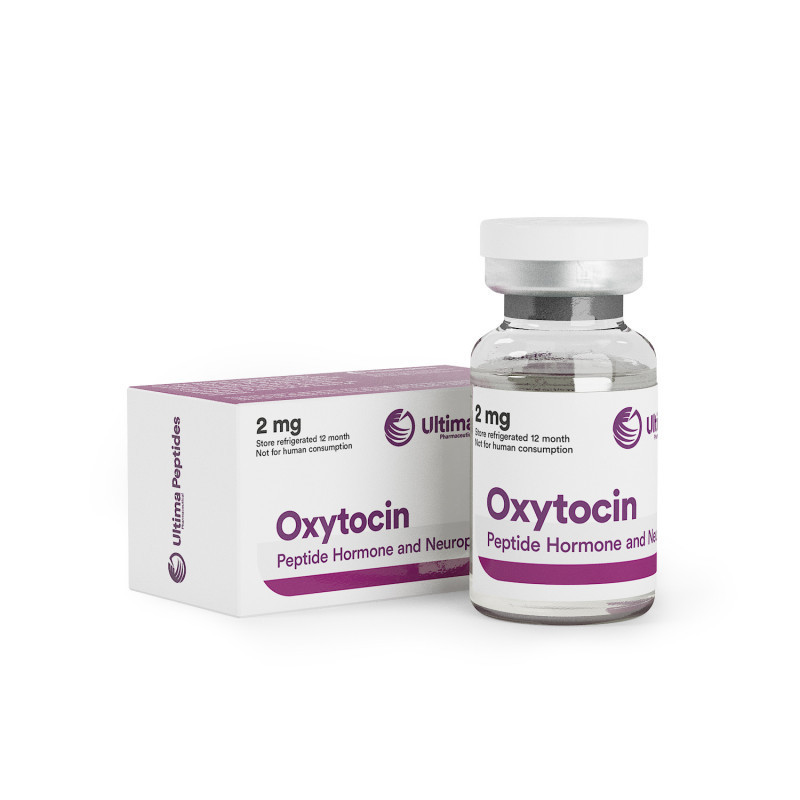
Ultima-Oxytocin 2mg
- Brand: Ultima Pharmaceuticals - US
- Product Code: Ultima-Oxytocin 2mg
- Availability: In Stock
-
$45.00
MANUFACTURER
Ultima Pharmaceuticals - USA
WAREHOUSE
USA Warehouse 5
ACTIVE INGREDIENT
Oxytocin
Your order will be shipped discreetly, free from branding for your peace of mind.
Oxytocin, often dubbed the "cuddle hormone" or "love hormone," is a remarkable hormone secreted by the posterior lobe of the pituitary gland, a tiny yet vital component of the brain. This fascinating chemical is released during moments of intimacy and social bonding. In fact, a 2009 study in *Hormones and Behavior* suggested that even playing with pets can stimulate oxytocin release! However, its effects extend beyond affection.
While oxytocin can enhance positive bonding experiences, it can also amplify memories of negative interactions, especially in men with complicated relationships with their mothers. This duality illustrates that oxytocin's influence?whether it fosters love or suspicion?largely depends on the context in which it is experienced.
Oxytocin's Role in Women
For women, oxytocin is pivotal. Behavioral neuroscientist Larry Young from Emory University highlights that oxytocin is crucial in childbirth and nursing. This powerful peptide stimulates uterine contractions during labor and helps the uterus return to its normal state after delivery. It also plays a key role in breastfeeding; when a baby suckles, oxytocin is released, facilitating milk letdown for feeding.
Oxytocin fosters deep connections between mothers and their children. Research indicates that female rats, who initially find their pups aversive when they are virgins, undergo significant brain changes after giving birth, causing them to find their pups irresistible. Similar behavioral shifts are observed in humans. A 2007 study published in *Psychological Science* found that mothers with elevated oxytocin levels in their first trimester exhibited more bonding behaviors, such as singing or bathing their newborns. While maternal bonding can be learned?evident in adoptive mothers?oxytocin appears to enhance feelings of attachment during pregnancy. Notably, interactions with infants can boost their own oxytocin levels.
Oxytocin's Influence on Men
Oxytocin is equally influential for men. A 2012 study revealed that fathers receiving oxytocin via nasal spray engaged more intimately with their five-month-olds compared to those who did not receive the hormone. It's important to note that vasopressin, another hormone, has a more profound impact on male bonding.
However, the social effects of oxytocin are complex. Research shows that Dutch students receiving oxytocin developed more positive feelings towards characters with Dutch names while displaying negative biases towards those with Arab or German names. This suggests that oxytocin's bonding effects may primarily favor individuals perceived as part of one?s in-group, as highlighted in a January 2011 study published in *PNAS*.
Another study in *PNAS* from 2010 found that men with secure relationships viewed their mothers as more caring after receiving oxytocin, while those with tumultuous relationships perceived them as less nurturing, indicating that the hormone can solidify social memories, enhancing both positive and negative associations.
Young explains, "Oxytocin enhances the salience of social information, linking areas responsible for processing social cues?like sights, sounds, and smells?to the brain's reward system."
Exploring Oxytocin Nasal Sprays and Their Effects
Oxytocin nasal sprays are under investigation as potential treatments for autism, a condition often marked by challenges in social interactions. A 2013 study in *PNAS* administered oxytocin to children and adolescents with autism and monitored their ability to recognize emotions through photographs of eyes.
While participants did not show improved recognition, heightened brain activity in areas related to social interaction suggests oxytocin might bolster behavioral therapy for children with autism. Young emphasizes the importance of utilizing oxytocin positively in social contexts.
However, the use of oxytocin sprays outside clinical environments remains ambiguous. Products available online without prescriptions claim to reduce stress and enhance social interactions, but they lack FDA regulation, raising concerns about their effectiveness, side effects, and actual content.
Long-term studies on the side effects of legitimate oxytocin sprays remain scarce, as most research involves single doses. In contrast, Pitocin, a synthetic version of oxytocin used during labor induction, is known to produce side effects like nausea, vomiting, and abdominal discomfort.